

Learn the professional approach to lighting design. Discover how layering ambient, task, accent, and decorative light creates balanced, functional, and beautiful home interiors.
Great interior lighting isn't about one perfect fixture—it's about creating a symphony of light sources that work together. Understanding the four layers of light transforms how you approach any room, from a cozy reading nook to a grand living space.
The Problem with Single-Source Lighting
Walk into many homes and you'll find the same issue: one central ceiling fixture trying to do everything. The result? Harsh shadows, unflattering light, and spaces that feel flat and uninviting regardless of how beautiful the furnishings are.
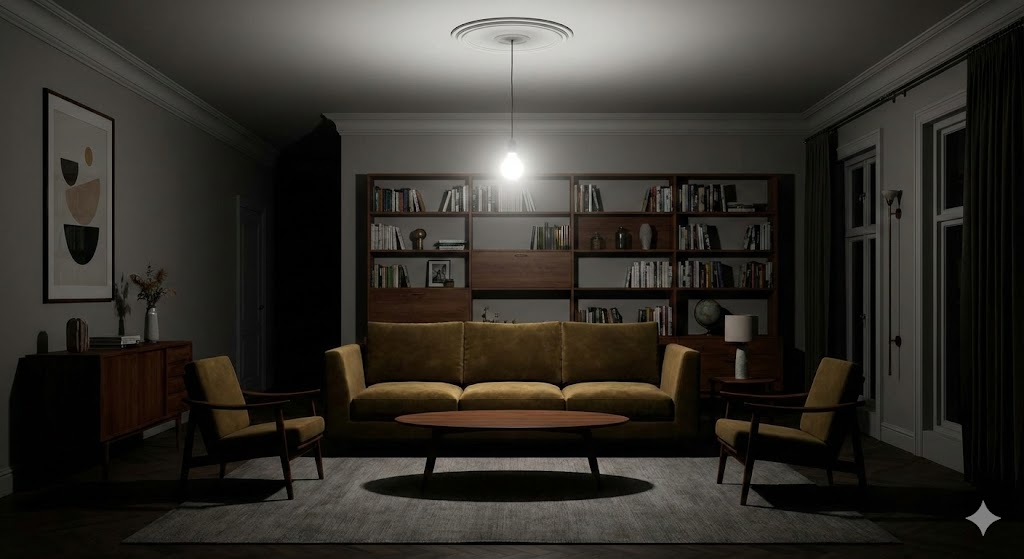
Even when there are multiple light sources, if they're all the same type and intensity, the room still lacks dimension and character.
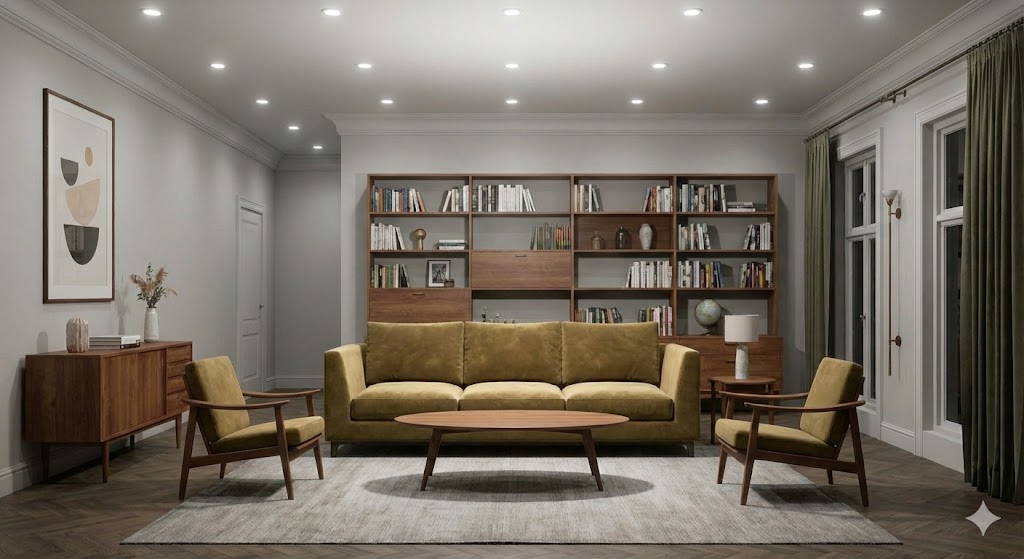
The Four Layers of Light
Professional lighting designers think in terms of four distinct layers, each serving a specific purpose:
1. Ambient Lighting (The Foundation)
Ambient lighting provides the overall illumination for a space. It's your base layer—the light that lets you move safely through a room and see generally what's around you. Common sources include:
- Recessed ceiling lights
- Central pendants or chandeliers
- Cove lighting
- Wall-washing fixtures
The key is to provide enough light for general activities without creating harsh contrasts or glare.
2. Task Lighting (The Practical Layer)
Task lighting delivers focused illumination where you need it for specific activities. This layer is all about function:
- Kitchen: Under-cabinet lights for food preparation
- Office: Desk lamps for reading and computer work
- Bathroom: Vanity lights for grooming
- Living room: Reading lamps beside seating
Task lighting should be bright enough to prevent eye strain without spilling unnecessarily into surrounding areas.
3. Accent Lighting (The Drama)
Accent lighting creates visual interest by highlighting architectural features, artwork, or decorative elements. This is where lighting becomes design:
- Picture lights illuminating artwork
- Directional spots on sculptures or plants
- Wall washers emphasizing texture
- Under-cabinet lighting showcasing collectibles
The rule of thumb: accent lighting should be three times brighter than ambient lighting on the objects you're highlighting.
4. Decorative Lighting (The Jewelry)
Decorative lighting is meant to be seen—these fixtures are design statements in themselves:
- Statement chandeliers
- Sculptural pendants
- Artistic table lamps
- LED art installations
While they may also provide ambient or task lighting, their primary purpose is visual impact.
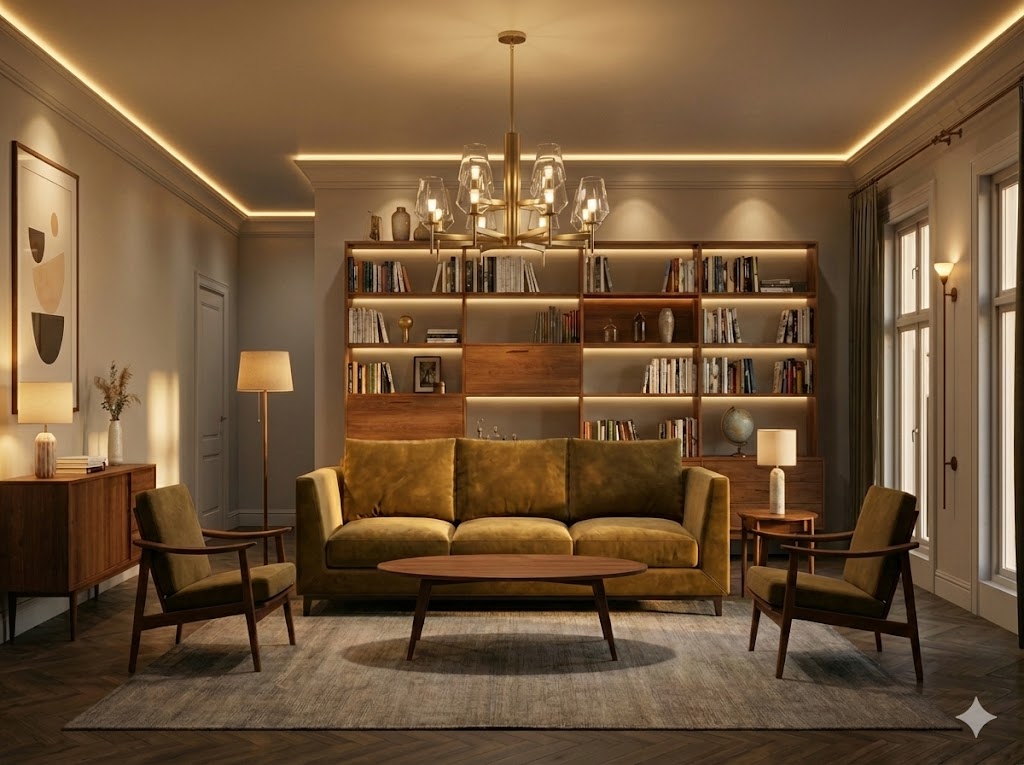
Bringing It All Together
The magic happens when all four layers work in harmony. Consider a living room:
- Ambient: Recessed lights on a dimmer provide overall illumination
- Task: Floor lamps beside reading chairs offer focused light
- Accent: Directional spots highlight artwork and architectural details
- Decorative: A sculptural pendant serves as a focal point
With independent controls for each layer, you can shift the mood from bright and energetic during the day to intimate and relaxed in the evening.
Practical Tips for Implementation
- Install dimmers everywhere: Flexibility is essential for layered lighting
- Plan circuits separately: Each layer should be independently controllable
- Consider color temperature: Keep it consistent within each layer
- Think about reflection: Surfaces affect how light behaves
- Don't forget natural light: Your artificial lighting should complement daylight
Working with a Professional
While understanding layers of light helps you communicate your vision, implementing it effectively requires expertise in electrical planning, fixture selection, and spatial design. At Vahid Studio, we create lighting schemes that transform spaces—not just illuminate them. Contact us to discuss how layered lighting can elevate your home.
